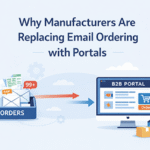
Digital transformation is rapidly reshaping the way B2B companies interact with their customers. Modern business clients expect faster communication, transparent processes, and seamless access to information. Traditional methods such as manual order processing, email-based communication, and disconnected systems can slow down operations and negatively impact customer satisfaction.
To meet these expectations, many organizations are adopting ERP connected B2B portals that integrate internal business systems with customer-facing platforms. A well-designed B2B business portal enables businesses to streamline operations, provide real-time information, and improve customer engagement. By connecting enterprise resource planning (ERP) systems with a portal interface, companies can create a unified digital environment that enhances both efficiency and the overall customer experience. For businesses managing client interactions, integrating a B2B client portal further improves accessibility and communication.
In addition, ERP-integrated portals support advanced b2b customer management, allowing businesses to maintain strong relationships with clients while delivering faster and more personalized services.
What is an ERP-Connected B2B Portal?
An ERP integrated B2B portal is a secure digital platform that connects customers directly to a company’s ERP system. Through this portal, customers can access important information such as orders, invoices, product availability, and account details in real time. These portals often work alongside approval workflow software to automate internal approvals and streamline business processes. Instead of relying on multiple communication channels or manual updates from sales teams, clients can log in to the portal and manage their business interactions independently. This integration allows businesses to synchronize internal operations with customer-facing processes. Key components of an ERP-connected portal include:- Customer dashboards with personalized information
- Order management integrated with ERP data
- Inventory visibility
- Invoice and billing access
- Document sharing and communication tools
Why Customer Experience Matters in B2B Businesses
In today’s competitive market, B2B buyers expect the same level of convenience and digital efficiency they experience in B2C platforms. Businesses that fail to provide smooth digital experiences risk losing customers to more technologically advanced competitors. For SME manufacturers and distributors, ERP-connected portals help reduce operational complexity and administrative workload while giving customers direct access to essential business information. Customer experience in B2B environments is influenced by several factors, including:- Speed of communication
- Transparency in order processing
- Access to real-time business information
- Easy document retrieval
- Personalized service and pricing
Key Ways ERP-Connected Portals Improve Customer Experience
1. Access to Orders and Account Information
ERP-connected portals give customers instant access to order history, invoices, shipment updates, and account details. This transparency reduces reliance on support teams and helps customers make faster, informed decisions.2. Faster Order Processing
When orders are placed through the portal, they are automatically synced with the ERP system. This eliminates manual data entry, reduces errors, and speeds up the order processing cycle.3. Self-Service Capabilities
Customers can place orders, download invoices, check product and stock availability, track deliveries, and submit support requests independently, improving convenience while reducing the workload for support teams.4. Improved Communication and Transparency
Centralized notifications for orders, payments, and shipments keep customers updated in real time, ensuring clear and transparent communication.5. Better Personalization and Relationship Management
ERP data enables personalized pricing, recommendations, and targeted offers, supporting stronger B2B customer management and long-term client relationships.Business Benefits of ERP-Integrated B2B Portals
Beyond improving customer experience, ERP-connected portals also deliver significant operational advantages for businesses. Key benefits include:- Improved operational efficiency : Automation reduces manual work and streamlines internal workflows.
- Reduced customer support workload : Self-service features allow customers to access information without contacting support teams.
- Higher customer retention : Providing convenient digital tools increases customer satisfaction and loyalty.
- Better data visibility : Businesses gain access to real-time insights into customer behavior and transactions.
- Stronger partnerships : Transparent processes and faster services create long-term relationships with clients.
Key Features to Look for in a B2B Business Portal
When selecting or developing a B2B portal, businesses should focus on features that enhance both usability and integration capabilities. Important features include:- Seamless ERP integration
- Secure authentication and user role management
- Order and inventory tracking
- Reporting and analytics dashboards
- Mobile-friendly design
- Scalable architecture for future growth
- Advanced b2b customer management tools