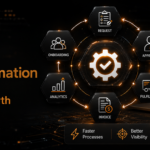
Many businesses still depend on emails, spreadsheets, and manual approvals to manage customer requests, supplier communication, and internal processes. While these methods may work initially, they often create delays, repetitive administration work, and poor visibility as operations grow.
Self service portal software with workflow automation helps businesses streamline these processes through a centralized digital platform. Customers, suppliers, employees, and partners can access information, submit requests, track updates, and complete tasks independently while automated workflows handle approvals, notifications, and process routing in the background.
In 2026, businesses are investing in workflow driven self service portals to improve operational efficiency, reduce manual work, and create faster digital experiences across departments.
What Is Self Service Portal Software With Workflow Automation?
Self service portal software is a digital platform that allows users to access services and information without depending entirely on manual support from internal teams.
When combined with workflow automation, the portal can automatically manage business processes such as approvals, notifications, document handling, task assignments, and status updates.
For example, a customer may submit an order request through the portal, which automatically triggers approval workflows, inventory checks, notifications, and ERP updates without requiring multiple manual actions from staff.
Businesses use workflow enabled self service portals for:
- Customer service requests
- Supplier onboarding
- Purchase approvals
- Invoice management
- Document sharing
- Order processing
- Employee requests
- Procurement workflows
These portals are commonly integrated with ERP and business management systems so information flows automatically between departments and users.
Platforms such as Applications Platform help businesses create workflow driven portals that simplify operational processes while improving visibility for customers, suppliers, and internal teams.
Why Businesses Are Moving Toward Workflow Automation
Manual business processes often create operational bottlenecks. Employees spend significant time sending emails, following up on approvals, updating spreadsheets, and managing repetitive administrative tasks.
As businesses grow, these manual workflows become difficult to scale efficiently.
Common challenges include:
- Delayed approvals
- Missed communications
- Duplicate data entry
- Lack of process visibility
- Slower customer response times
- Disconnected systems
- Inconsistent workflows across departments
Workflow automation helps businesses standardize and streamline these processes.
Instead of manually routing requests between teams, the system automatically moves tasks through predefined workflows. Notifications, approvals, escalations, and updates happen automatically, reducing delays and improving accuracy.
For example, a supplier onboarding request can automatically move through verification, approval, compliance checks, and account creation without requiring multiple email exchanges.
In 2026, workflow automation is becoming essential for businesses that want scalable and efficient digital operations.
Key Features of Self Service Portal Software With Workflow Automation
Modern self service portal software includes features designed to simplify business operations and improve user experience.
- Workflow automation: Automates approvals, notifications, task routing, escalations, and status tracking across multiple processes.
- ERP integration: Connects directly with business systems so users can access real time information such as orders, invoices, inventory, and account data.
- Role-based access controls: Ensures customers, suppliers, employees, and partners only view information relevant to them.
- Self service request management: Allows users to submit requests, upload documents, track updates, and monitor progress independently.
- Document management: Centralizes invoices, contracts, compliance files, delivery notes, and operational records.
- Dashboards and reporting: Provides visibility into workflow performance, pending approvals, process bottlenecks, and operational activity.
- Mobile accessibility: Users can securely access workflows and business information from any device.
Together, these features help businesses reduce manual work while improving operational consistency and efficiency.
Benefits of Using Workflow Enabled Self Service Portal Software
- Improved operational efficiency: Automated workflows reduce repetitive manual tasks and help businesses process requests faster.
- Reduced dependency on email and spreadsheets: Lowers the risk of human error and missed approvals.
- Enhanced process visibility: Users and teams can monitor request status, approvals, and workflow progress in real time.
- Better customer and supplier experience: Users can track requests and access information directly through the portal.
- Supports scalability: Businesses can handle higher volumes of transactions without increasing administrative staff proportionally.
- Improved compliance and consistency: Approvals and operational steps follow predefined rules.
- Faster response and collaboration: Reduces bottlenecks and improves interdepartmental efficiency.
Which Industries Use Workflow Driven Self Service Portals?
Workflow enabled self service portals are used across many industries where businesses manage high volumes of operational processes and approvals:
- Manufacturers: Automate order processing, production approvals, and customer communication.
- Distributors and wholesalers: Manage pricing requests, inventory visibility, and customer ordering workflows.
- Procurement teams: Supplier onboarding, purchase approvals, invoice processing, and compliance management.
- Service-based businesses: Manage support requests, project approvals, and customer communication.
- Healthcare, logistics, construction, and financial services: Improve operational control and reduce manual administration.
As businesses continue digitizing operations,
workflow automation portals are becoming an important part of modern process management strategies.
Conclusion
Self service portal software with workflow automation helps businesses simplify complex operational processes while improving visibility, efficiency, and customer experience.
By automating approvals, requests, notifications, and business workflows, companies can reduce manual administration, improve process accuracy, and support long term operational growth.
Businesses looking to modernize customer, supplier, and operational workflows are increasingly adopting solutions from providers like Applications Platform to create scalable ERP integrated self service experiences.
In 2026, workflow automation is no longer just an efficiency improvement. It has become an essential part of building scalable and digitally connected business operations.